Sal Khan is the creator of Khan Academy, the most consequential free, open educational resource ever built. The peers worth comparing it to are Wikipedia, Sesame Street, and MIT OpenCourseWare. Each is huge in its own way, but none of them does what Khan does - actual sequenced instruction, in core academic subjects, free, available to anyone with a connection, working at the kid’s pace. His company has been working on an AI tutor for 2 years. I’ve tried it, and tried to get my kids to try it… they basically won’t. Not unless I’m sitting next to them and watching.
Khan told Chalkbeat last week that his 2023 vision of “an artificially intelligent but amazing personal tutor” for every student on the planet has not been super effective in classrooms. Khanmigo is in schools but most students are not using it. As Khan put it: “if I walked into a class and sat in the back, some students would seek help. Most wouldn’t.” That definitely fits with my homework experience.
Khan Academy tried their tutor, Khanmigo, in classrooms for 2 years. Khan’s key insight:
“AI as another adult in the room produces the same engagement curve as actual adults in the room.”
That is not a failure of the technology, it’s a learning about the use case. And it leads me to think about how to use AI in education in a totally different way.
A lot of focus has gone to the AI-tutor lever, and for motivated (and probably adult) learners, it’s a really good one. I’ve used it, and I love it. But it isn’t the only one. Based on the Khanmigo experience, it might not be the right one. (I trust Khan Academy to get it right if it’s possible.)
Here’s a lever I want to pull: Real time, in the moment customization.
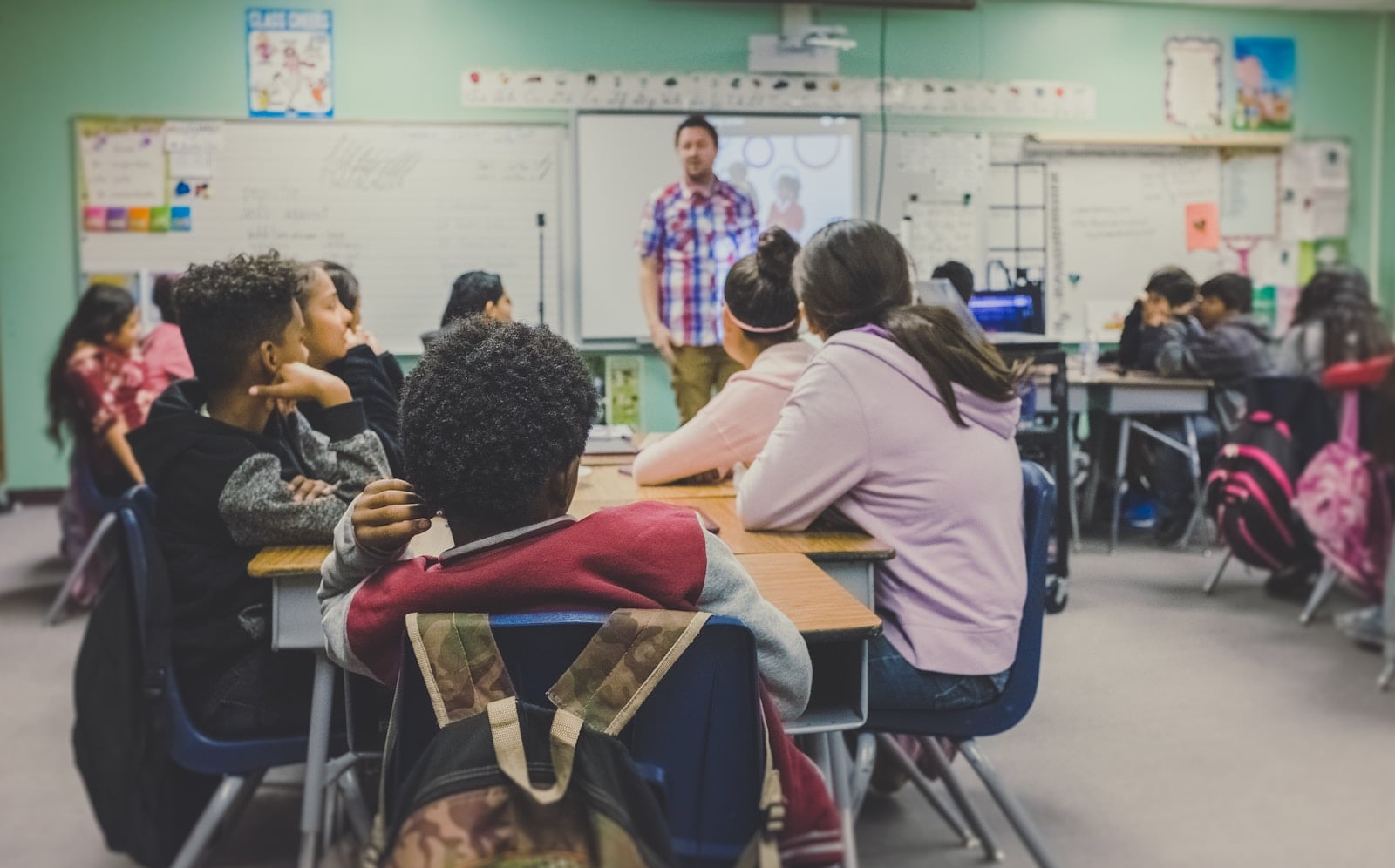
A teacher with thirty kids knows which ones got it on the third rep and which are still confused at the fifteenth. They can see it, but they can’t react to it. No human teacher can deliver thirty different next-steps in real time. A static program can’t do it either; it serves whatever curve it was built around, the same curve, to every kid. The kid who got it gets bored. The kid who didn’t get it gets frustrated. A single channel - one teacher, one fixed program - cannot serve thirty kids whose needs split in opposite directions.
That is the gap I think AI can actually fill. Not by being the kid’s tutor. But by serving up the same curriculum to different kids in customized ways. By noticing patterns and adjusting difficulty without anyone having to ask. By running and interpreting the analytics it would take a curriculum team a year and a doctorate to get actionable results from. And by reacting to the findings in real time. By meeting kids where they are and at their own pace, I hope it will enable the experience Khan named more than a decade ago: mastery learning, where students move on when they have actually learned, and not a moment before.
I’m building an educational program myself, and this is the lever I’m trying to pull. AI as the super-aware, data-driven, intensely changeable and individualized delivery engine. My proposition is that teachers are already the best social mediators of education. And curriculum designers are already fantastic creators and sequencers of content. Those aren’t the gaps. The gap is in context-aware, functionally unlimited differentiation of delivery. And this is where AI can really shine.
Let me be clear, I don’t mean that we should give up on Khanmigo or any other AI tutoring - some kids are using it, and more probably will as AI goes more mainstream. I’m just suggesting that there are other levers, and some of them might be more universally impactful.
Khan’s first move, the thing that made Khan Academy work, was to make instruction consumable at the kid’s own pace. A kid having a bad day, a headache, or a hard lunch hour doesn’t lose the lecture, because the lecture is still there at three in the morning. Mastery learning was the natural next step. The adaptive system that meets a kid exactly where they are is the next step after that. I think this is the next iteration of technology-driven education.